

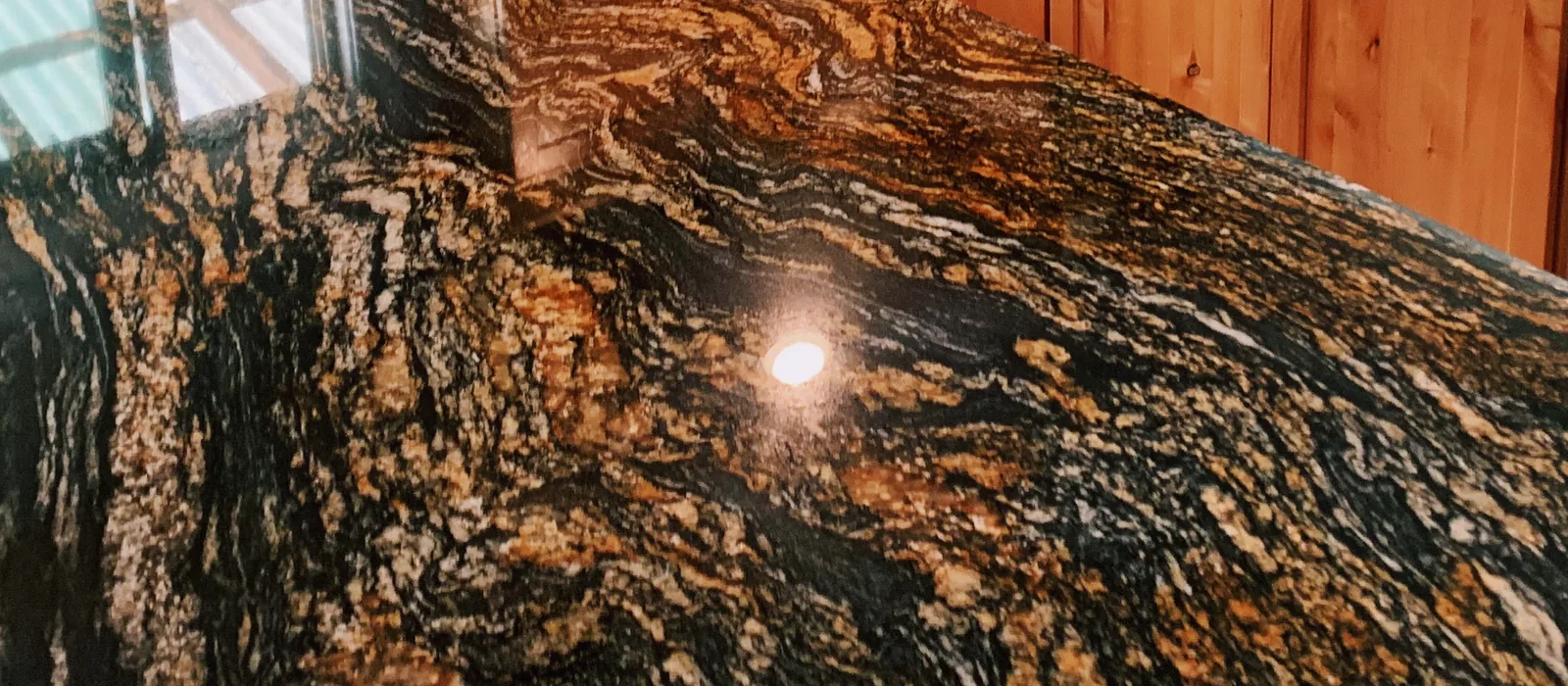
Small pits in polished granite are usually natural and harmless. Soft mineral flakes come out of the surface and leave a tiny dimple, often before the top is ever installed. You can leave them alone or have them filled. Sealer will not change them. A crater, a row of pits or a rough patch is a different question.
Why granite has pits at all
Granite is not one solid material. It is a mix of interlocking crystals, mostly quartz, feldspar and mica, and they do not have the same hardness. Quartz and feldspar take a mirror polish. Mica is soft and grows in thin sheets, so its flakes can tear out when a slab is polished, or loosen later on. What is left is a small dimple with polished stone all around it.
Many slabs also get a resin treatment before polishing that fills small voids, so what you see partly depends on how the slab was finished and how much mica it holds. Two kitchens in the same stone name can look different up close.
That is why people often find pits months after their countertops went in. The stone did not change. The light came in low one morning, or a crumb caught on something, and now the pit is all you can see. Pits show most on dark, highly polished stone, because the shine around them gives a sharp contrast. On a honed or leathered finish, they are hard to notice at all.
What you see and what it usually means
This is the short version. A photo or a close look settles the rest, because the same dimple can mean different things depending on where it sits.
| What you see | What it usually is | What usually works | Who does it |
|---|---|---|---|
| A few pinhead dimples, often in dark flakes | Natural pits from lost mica | Leave them, or a clear fill | Your call |
| Tiny pits scattered evenly across the top | The natural texture of that slab | Nothing needed | Nobody |
| A small crater with a pale, bruised spot | An impact from something dropped | Tinted fill and polish | A repair pro |
| A pit breaking through at an edge or sink rim | The start of a chip | Fill before it grows | A repair pro |
| Several pits in a straight or wandering line | A fissure or a crack | Check it first, then decide | A repair pro |
| A rough, dull patch near the sink or a cleaner | Chemical or abrasive wear | Stop the cleaner, then refinish the area | A repair pro |
| A tiny hole in quartz | A manufacturing void or a small chip | Color-matched fill | A repair pro |
Not sure which row is yours? Send us photos through the planner. The repair path takes your photos and details without putting an automatic price on them, so someone looks first. If the answer is that your stone is fine, that is what we will tell you.
Three checks you can do in a minute
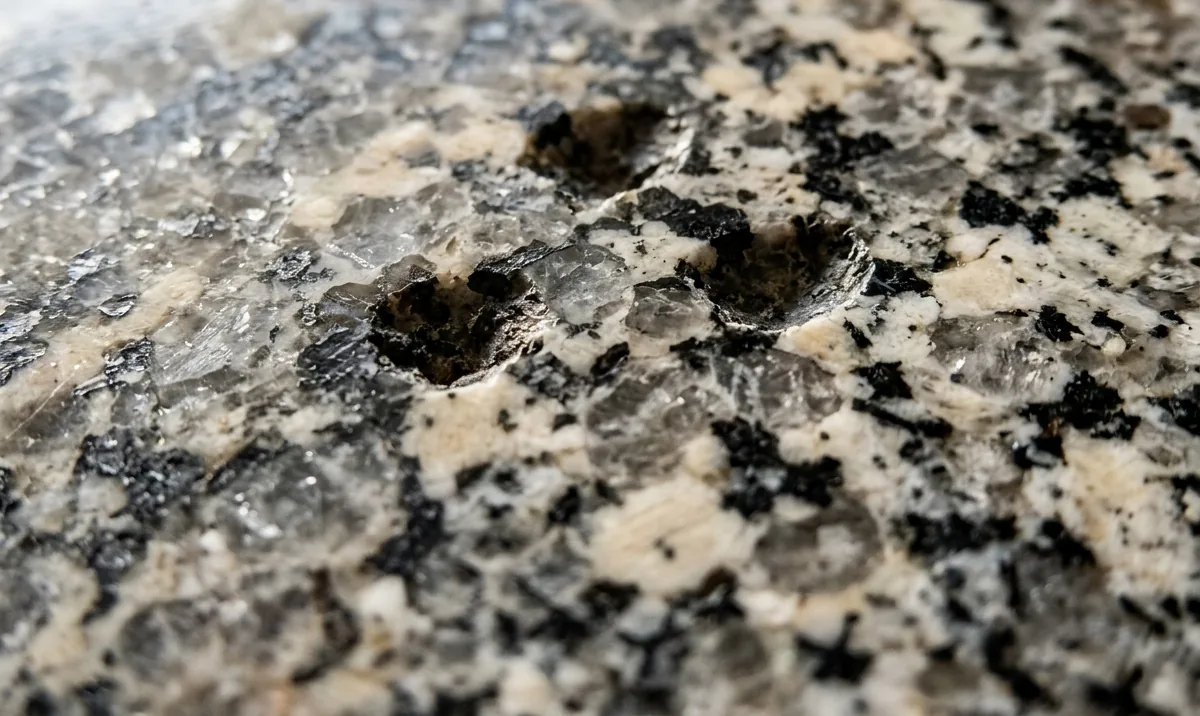
Use a flashlight, held low. Lay it almost flat on the counter in a dim room. A pit throws a tiny round shadow. A real crack throws a thin line. A smudge or dried water disappears when you wipe it.
Use your fingernail. A natural pit feels like a pinprick with smooth stone right up to its edge. If the stone around it feels rough or crumbly over a wider area, that is not one pit, it is worn surface.
Look at the pattern. Pits scattered at random, sitting in dark flakes, point to the stone. Pits in a line need a closer look, and our article on cracks and natural fissures walks you through the tests. A single crater right where you set down heavy pans points to impact.
Sealer will not fill a pit
This is the most common wrong turn. Penetrating sealer soaks into the pores of the stone to slow down staining. It does not build up, so a pit looks exactly the same after sealing as it did before. Piling on extra coats leaves a film that dries hazy on polished stone, and then you have a new problem. Seal when your stone needs it, and treat pits as a separate question. Our guide to stains and etch marks covers the water test that tells you when sealing is due.
How a pit gets filled, and whether to bother
The work is small and careful. The pit is cleaned out and dried, because trapped moisture or grease weakens the bond. A clear or tinted resin goes in, slightly proud of the surface. Once it cures, it is cut flush with a razor and polished to match.
A good fill makes a pit very hard to find, and crumbs stop catching in it. It does not make the pit disappear in every light. Resin is not stone, so it can reflect a little differently when you look across the surface at a low angle. We will not promise otherwise.
Whether it is worth doing comes down to where the pit is. One pinhead dimple in a busy pattern, away from your prep area, is usually best left alone. A larger pit in the middle of a dark top, one that keeps catching crumbs or your dishcloth, or one breaking through near an edge is a good candidate. An edge is the place to act soonest, since a chip at the edge can keep growing with everyday knocks.
You can try a very small pit yourself with a clear stone repair kit. What usually goes wrong is a hazy ring around the spot or a fill left standing above the surface. Keep sandpaper away from it: on polished granite it leaves a dull patch far bigger than the pit, as our piece on scratched countertops explains. For the broader picture of what this stone can get, see our granite countertop repair page.
If your countertop is not granite
Quartz is engineered and has no mica to lose, so a small hole means a tiny manufacturing void or an impact chip. Our quartz repair page explains how those are filled.
Quartzite is natural stone and can have small surface voids of its own, and they are handled much the same way. See our quartzite repair page.
Marble is different. Rough little marks there often come from acid eating at the stone, which is a separate problem covered in our article on marble countertop repair.
If you are still choosing a slab
See the actual slab before you commit, not only a sample. Ask to look at it with the light coming across the surface at a low angle, which is how you will see it at home in the morning. If a heavily polished dark granite is your favorite and pits would bother you, ask about a honed or leathered finish, which hides them far better.
What moves the cost
We do not publish a repair price, because a photo of a pit does not tell you what the job is. Small jobs have a minimum charge, and these move it from there: how many spots get done on one visit, whether a pit is at an edge or in the open, how closely a tint has to match a busy pattern, and whether a worn area needs refinishing and not only a fill. Plenty of pits need no visit at all, and we will tell you if yours is one of them.
Three questions before you do anything
Does it bother you, or just surprise you? Many people stop seeing a natural pit within a week of learning what it is.
Is it one spot or a pattern? One spot is a choice. A line or a rough patch needs an answer.
Is it near an edge or the sink? That is where a small problem is most likely to turn into a bigger one, so it is worth filling sooner.
Frequently asked questions
Is pitting in a granite countertop a defect?
Usually not. Granite is a mix of minerals, and soft flakes such as mica can come out of the surface during polishing or later, leaving a tiny dimple. Pits like that are part of how natural stone looks up close. A sudden crater, a row of pits along a line, or a rough patch is different, and those are worth having someone look at.
Can pits in granite be repaired?
Yes. A pit is cleaned, dried and filled with a clear or tinted resin, then cured, cut flush and polished. A good fill makes the pit far harder to find and stops crumbs from catching in it. We will not promise it vanishes, because a fill can reflect light a little differently from the stone around it when you look across the surface at a low angle.
Will sealer fill pits in granite?
No. Penetrating sealer soaks into the pores of the stone and helps slow staining, but it does not build up into a filler. A pit looks the same after sealing. Topical coatings or extra coats of sealer tend to leave a film that looks worse than the pit, so skip them.
Do pits in granite get bigger?
A normal pit generally stays the size it is. A nearby flake can occasionally come loose and make it look larger, and hard knocks can open a pit along its edge. If many new pits show up in one area over a few months, look at what is being used there, because acidic or abrasive cleaners can wear on softer minerals.
Can I fill a pit in granite myself?
You can on a small pit, in a spot you do not mind practicing on. Clear stone repair resin works best on dark, busy stone. The usual problems are a haze around the spot, a fill that sits proud of the surface, and scratches from sanding. Do not use sandpaper on polished granite, because that leaves a dull patch much larger than the pit.
Do quartz countertops get pits?
Not natural ones. Quartz is engineered, so it has no mica flakes to lose. A small hole in quartz is usually a tiny void left from manufacturing or a small impact chip. Either one can usually be filled with a color-matched resin. If you noticed it right after installation, tell your installer, since a manufacturing issue is handled differently from later damage.
Send two photos and we will tell you what you have
One close up with a low light across the spot, and one from a few feet back with the rest of the counter in it. That is usually enough to tell a natural pit from a chip or a crack, and it costs you nothing to ask. If it is normal stone, we will say so. Top Granite is a family business in Lynnwood, rated 5.0 on Google, and we handle repairs across the area, including Lynnwood, Seattle and Kent. Call or text 206-653-4479, use the contact page, or start with the budget planner. Our main countertop repair page has the rest of what we fix.
What could your
countertops cost?
Answer a few questions about your space and material and get an estimated range in about two minutes. Your formal quote follows a laser template and a review of the scope.
Your ideas in. A clearer next step out.
Rather talk it through? 206-653-4479 ↗︎What would you like to change?
Which material are you leaning toward?
Build my countertop estimateChoose your details and see your estimated range.
Related reading.
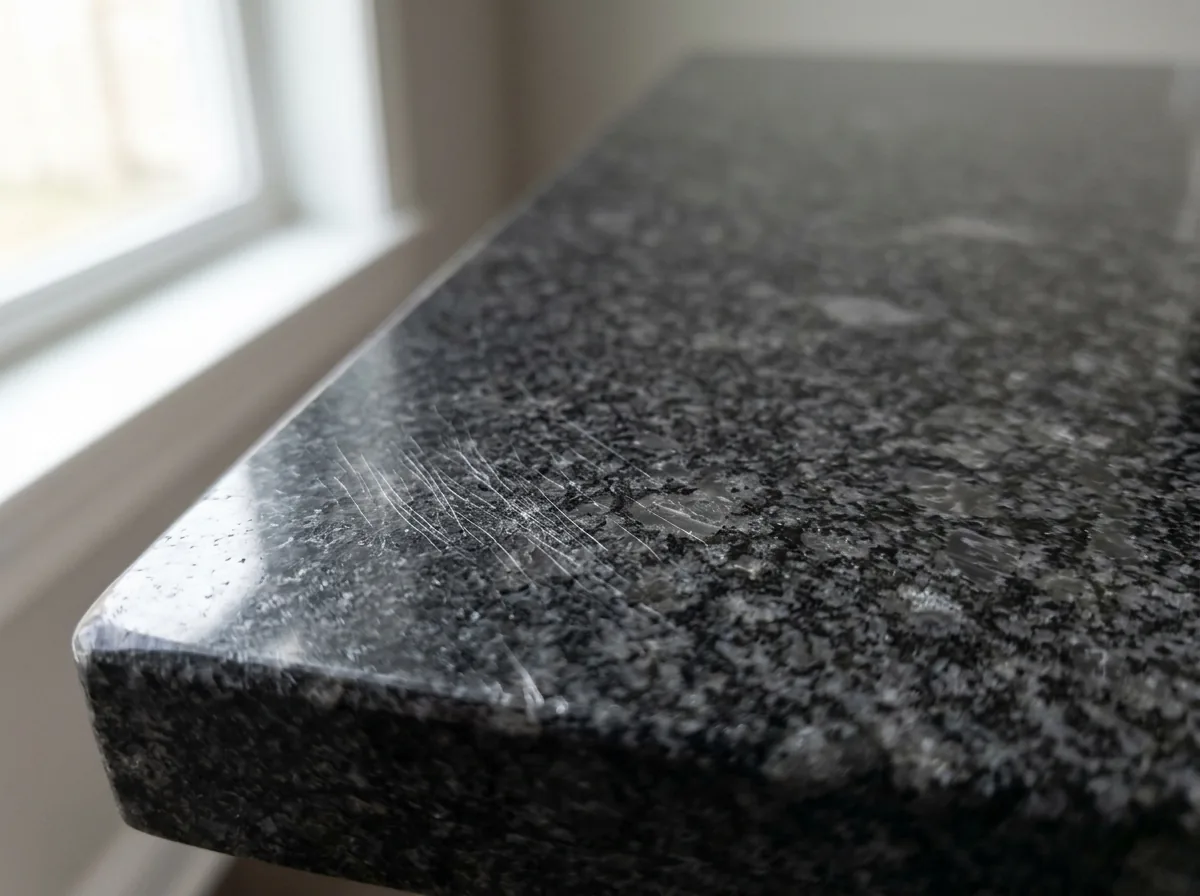
Scratched countertop: what sands out and what does not
Half of what people call a scratch is metal left on the stone and wipes off in minutes. For the rest, granite, quartz, marble and soapstone each answer the same sandpaper differently.
Read article ↗︎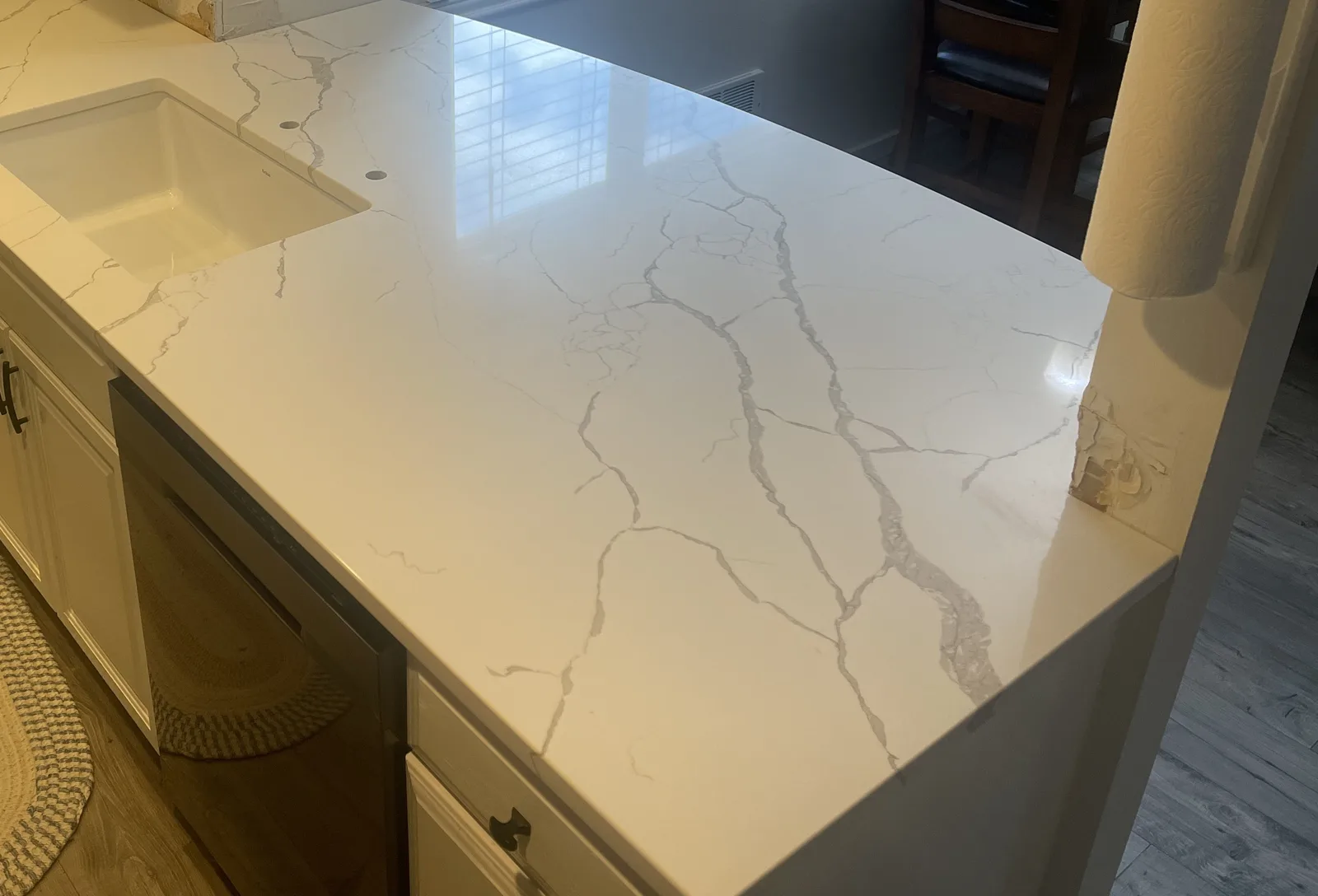
A chipped countertop edge: what a repair can and cannot do
A chip at the sink rail or on the corner of a peninsula is almost always repairable in place. How the fill is actually done, the seven situations where it holds and where it comes back, and why the same corner sometimes chips twice.
Read article ↗︎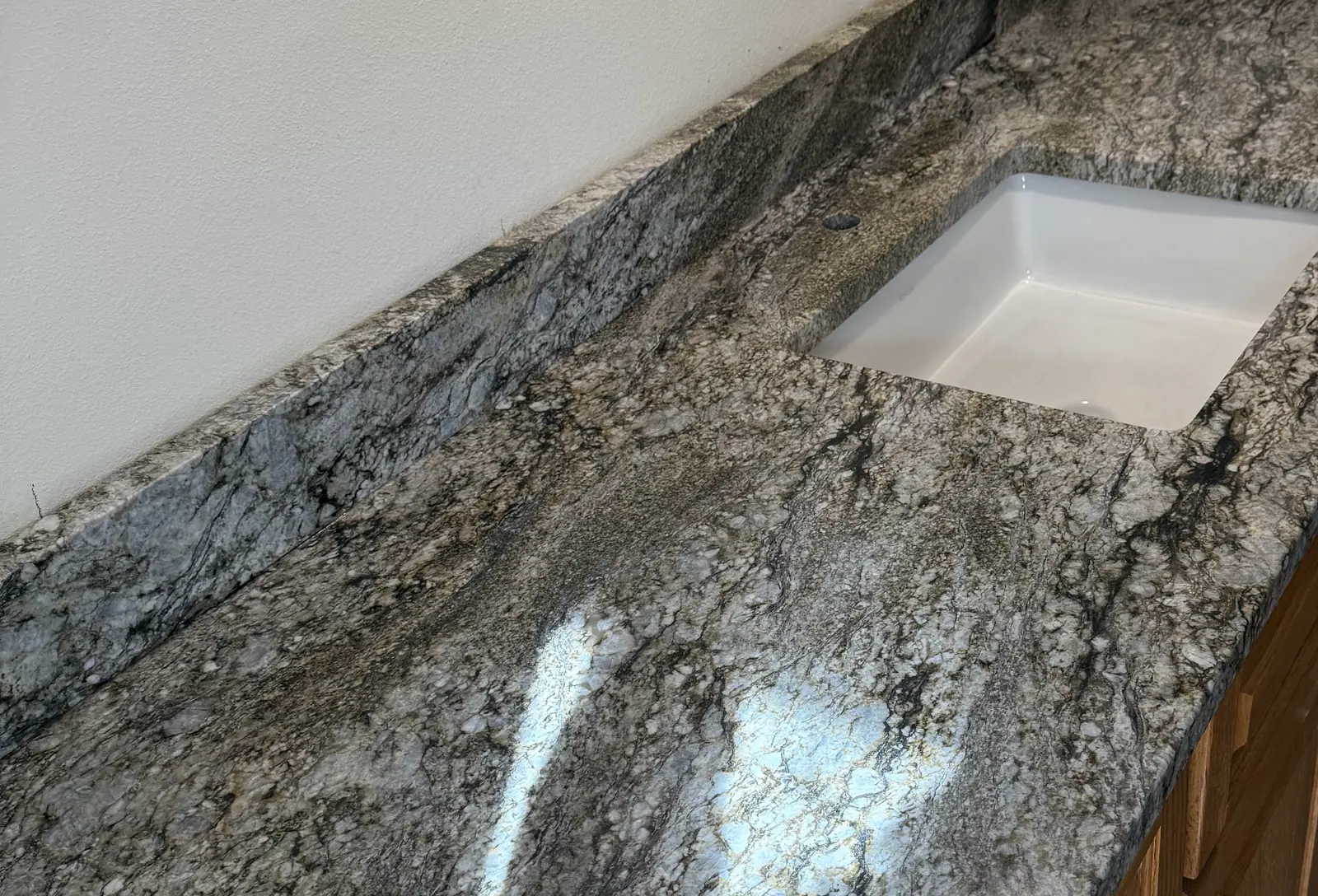
A hairline in your countertop: crack or natural fissure?
A good share of the lines homeowners report as cracks are natural fissures, which were in the slab the day it was cut. Five checks with a flashlight and a fingernail, and what each answer means.
Read article ↗︎Bring your ideas.
We’ll help with the next step.
Choose the next step that feels right for you.