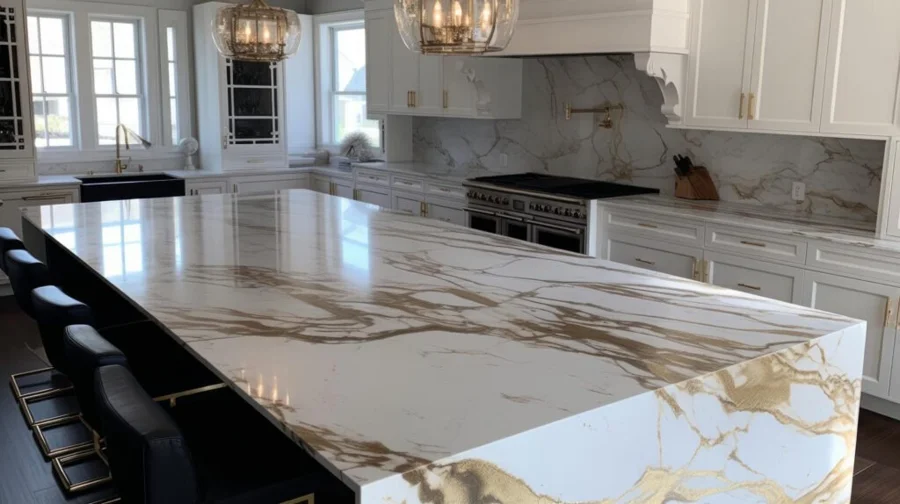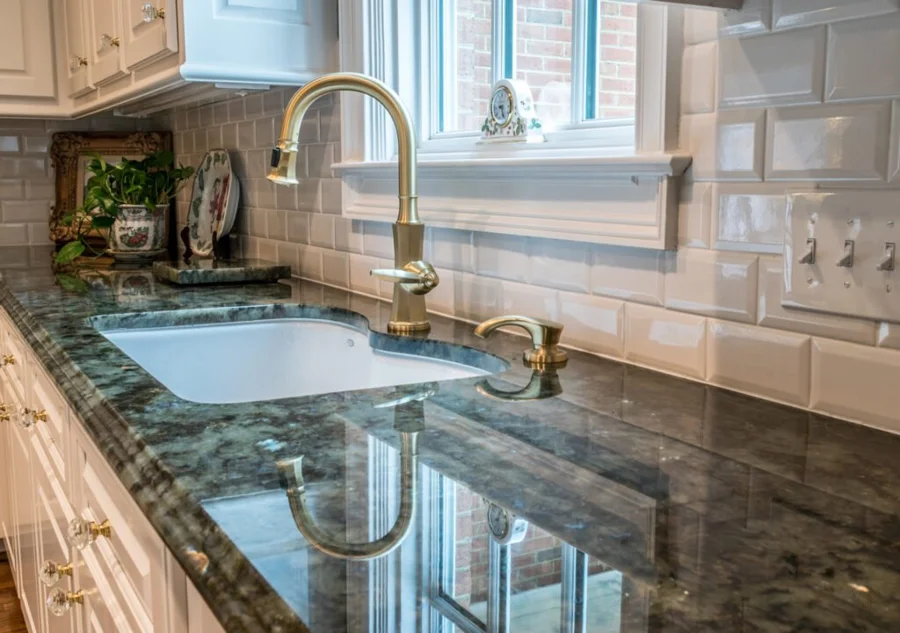

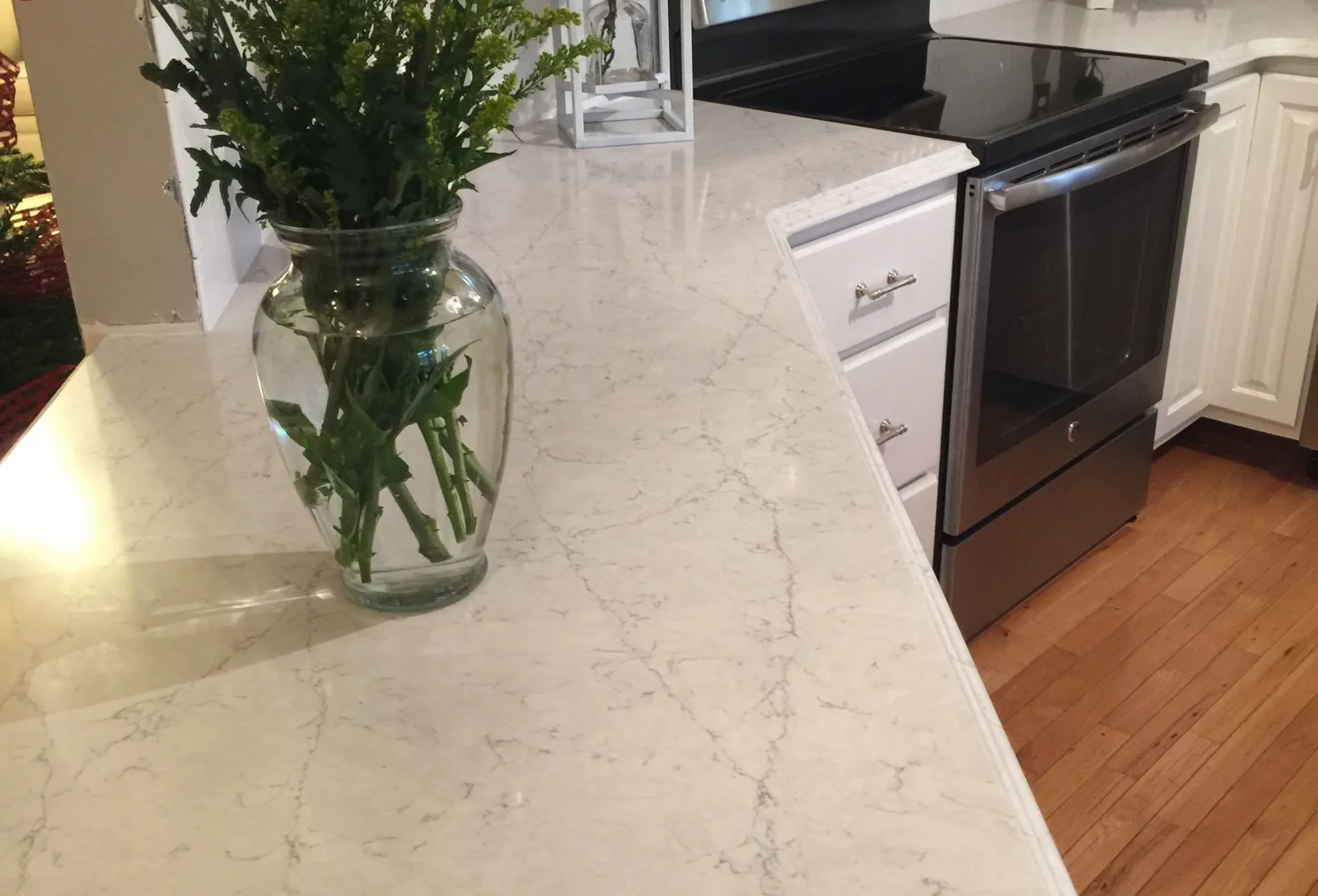
Marks on a stone countertop come in two kinds, and they are not fixed the same way. A stain soaked in and can often be drawn back out at home. An etch mark ate the polish and has to be worked back by hand. Here is how to tell which one you have, what is worth trying yourself, and when to call us.
A stain and an etch mark are not the same problem
Almost every call about a marked countertop is one of two things, and telling them apart decides everything that follows.
A stain is something that soaked in: olive oil, wine, coffee, a leaking bottle of cooking spray. The stone is porous, the liquid went below the surface, and the mark is darker than the stone around it. The surface still feels smooth and still reflects light normally.
An etch mark is the opposite. Something acidic, lemon, vinegar, tomato, or a bathroom cleaner never meant for stone, dissolved a thin layer of the polish. The mark is lighter than the stone, often a dull ring you only see when light hits it at an angle. Nothing is in the stone. The surface itself changed.
Why it matters: a stain can often be pulled back out, while an etch mark cannot, because there is nothing to pull out. It has to be polished back. Treating an etch mark with a stain remover wastes an afternoon.
Not sure which you have? Photograph it straight on and again from a low angle, then send it through our contact form or call 206-653-4479. The angle shot shows an etch that a flat photo hides.
The water test, and what sealer actually does
A sealer does not put a shield on top of your counter. It soaks in and slows how fast liquids get through, which buys you time to wipe a spill before it becomes a stain. Sealed granite left under a puddle of olive oil overnight will still stain.
So the useful question is not how long since it was sealed, but whether it still repels. Spill a tablespoon of water on the busiest spot, next to the sink or beside the range, and wait fifteen minutes. Wipe it. If the stone underneath darkened, it is drinking and it is time to reseal. If it left nothing behind, leave it alone.
That test beats any schedule, because stones differ enormously. A dense granite can go years without anything, while a soft one in a busy kitchen wants it yearly. Quartzite and marble sit at different points on the same scale, and soapstone is not sealed at all: it gets mineral oil, which darkens it evenly instead of protecting it.
What usually comes out at home
Fresh stains on granite are the ones worth trying yourself. The method is a poultice: a paste that sits on the stain and draws it back up as it dries, slowly and on purpose.
For an oil based mark, mix baking soda with a little water to about the texture of peanut butter, spread it over the stain a quarter inch thick, cover it with plastic wrap taped at the edges and leave it overnight. The next day let it dry uncovered, then scrape it off with something that is not metal. One round often lifts most of it, and two or three rounds are normal on an old stain.
Everything else is about what you stop using. Vinegar, lemon, bleach and the spray under most kitchen sinks all attack polished stone, where a pH neutral cleaner and a soft cloth do the daily work. And test any home treatment in a hidden spot first, the back of an overhang or inside the sink cutout.
What needs a professional
Etch marks need polishing, which means bringing the whole surrounding area back to an even finish rather than buffing one spot: a buffed circle in a polished counter reads worse than the etch did. That is hand work, and the result depends on the stone, how deep the acid went and the original finish. We say what we expect before starting, and we do not promise a mark will disappear.
The other jobs for a countertop repair visit are stains that have been there for years, a run that has gone dull end to end, and anything sitting next to a chip, a crack or a seam, since those get handled at the same visit.

Quartz plays by different rules
Engineered quartz is stone ground up and bound with resin, so it is effectively non porous. It does not need sealing, it will not drink your olive oil, and it does not etch from lemon juice the way marble does. If a company offers to seal your quartz, that is a reason to ask questions.
What it has instead is a resin that hates heat. A pan straight off the burner can leave a mark no cleaning removes, permanent in a way an oil stain never is. Trivets, not towels. Strong dyes left sitting, turmeric being the usual suspect, can tint the resin too.
Weighing materials precisely because you want less of this upkeep? The Budget planner gives an estimated range by material in about two minutes.
The habits that prevent most of it
Nothing here is surprising, which is the point. A cutting board, because knives dull polish and a cut lemon on bare stone is an etch waiting to happen. A trivet under anything off the heat. Coasters, since the ring left by a wine bottle is one of the most common calls we take. Spills wiped when you see them, not at the end of the evening.
And one that homeowners rarely think about: the dish soap. A bottle that weeps down its side onto the same two inches of stone, every day for a year, is a slow stain in the making. Move it onto a small tray.
When it is past repairing
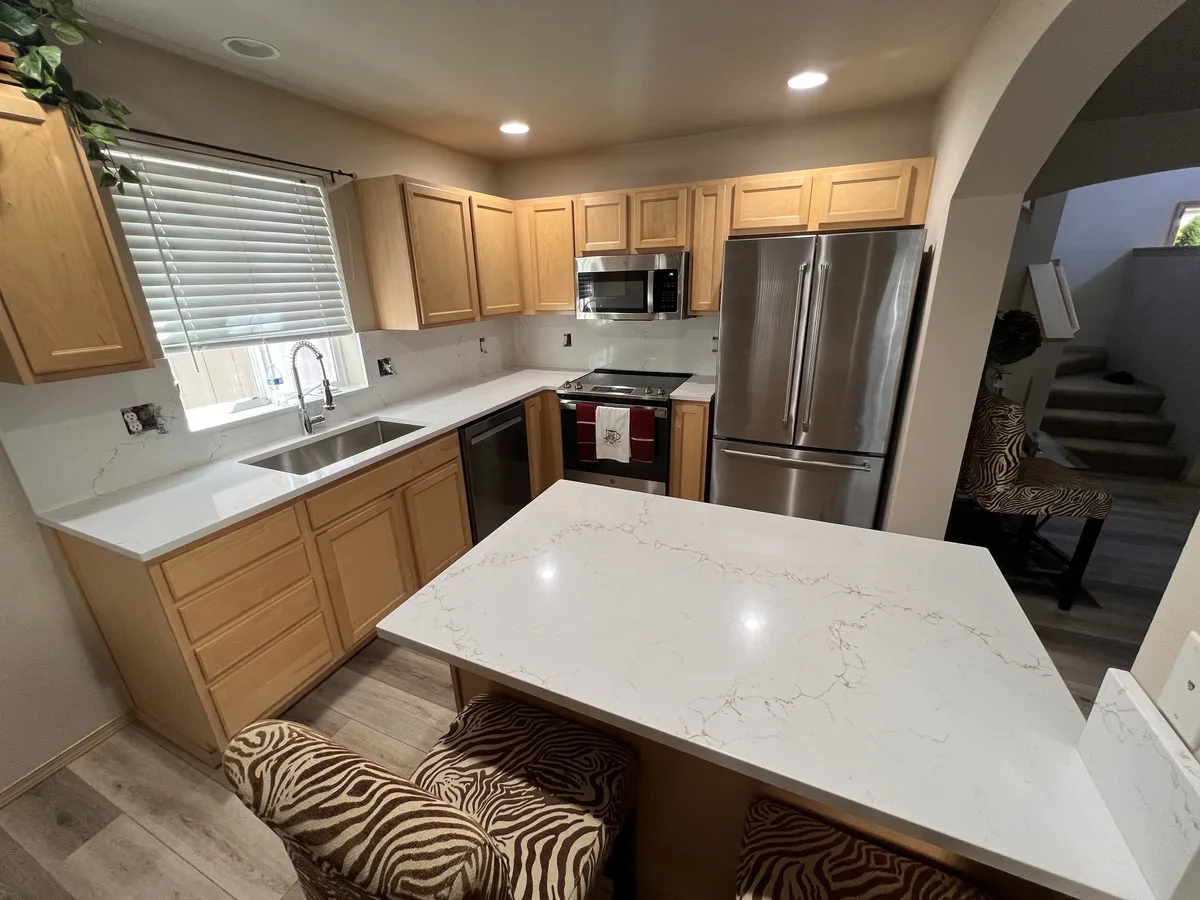
Some surfaces are not worth the hand work. Staining that keeps returning across a whole run usually means the stone is absorbent and tired rather than dirty, and a dull finish on every counter is a refinishing job big enough to make new stone the better buy. That is a different decision from fixing one mark, and we wrote it up separately: repair or replace your countertop walks through seven kinds of damage. More finished work is in the gallery.
Frequently asked questions
How often should granite countertops be sealed?
There is no honest calendar answer, because it depends on the stone. Use the water test: a tablespoon of water for fifteen minutes on the busiest spot. If the stone darkens, reseal. Some granite wants it yearly, some goes years without.
Can an etch mark on marble be polished out?
Light etching on a polished surface usually improves a great deal with hand polishing, and the area around it has to be worked to match. How close it gets depends on how deep the acid went and on the original finish, so we look before we say.
Does quartz need to be sealed?
No. Engineered quartz is bound with resin and is effectively non porous, so a sealer has nothing to soak into. Heat is its weak point instead, so use trivets.
The stain came back a week later. Why?
Oil migrates. A poultice pulls up what is near the surface, and more works its way up from deeper in the stone. Repeating it two or three times is normal, and a stain that sat for years may not come out completely.
Do you repair stains and etching, or only chips and cracks?
Both, and we repair work we did not install. Send a photo first, straight on and from a low angle, because the fix depends on what the mark actually is. We quote a repair after seeing it, never from a description.
Send a photo and we will tell you which one it is
A photo is the fastest way to know whether this is a weekend with baking soda or a job for us. Call Top Granite at 206-653-4479 or send it through the contact form. If you are closer to replacing than repairing, the Budget planner gives a range in about two minutes. We work from Lynnwood across greater Seattle and the Eastside, Monday to Friday 8am to 6pm and Saturday 8am to 12pm.