

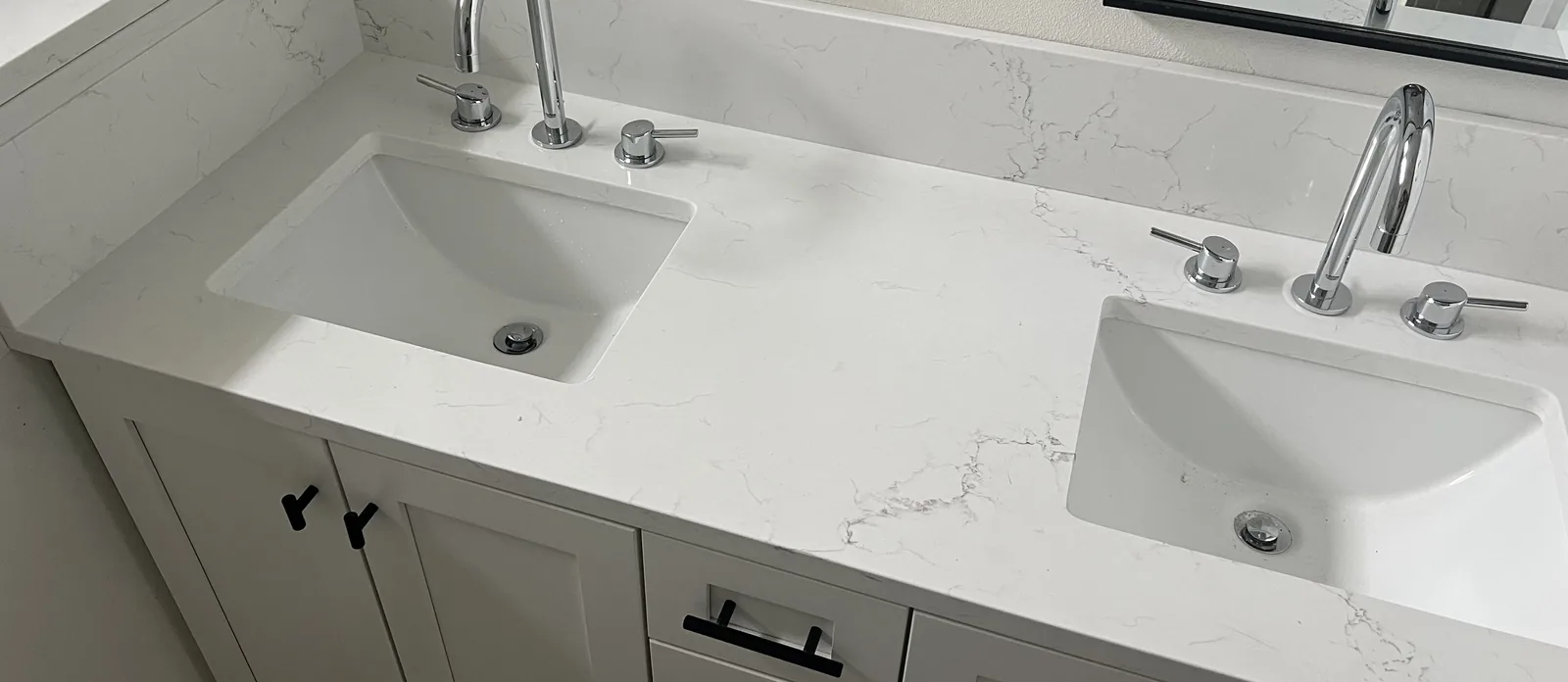
Most marble damage can be improved, and a lot of it can be made hard to find. Etching and fine scratches usually polish out of the finish. Chips and cracks can be filled, though a fill may still show on white stone. Deep stains sometimes stay. The finish decides how far the work spreads.
First, make sure it is marble
Plenty of tops people call marble are something else, and the repair changes with the material.
Check the paperwork. An old quote or invoice often names the stone. That beats any guess made from a photo.
Look at the sink. On a bathroom vanity, a bowl and top molded as one piece with no joint is usually cultured marble. That is a cast product with a coating on top, and it is not repaired like stone. Our guide to countertop refinishing explains what that surface can get.
Try a drop of acid somewhere nobody looks. Put a drop of lemon juice on a hidden spot, such as under an overhang. Wipe it off after a minute. If it leaves a dull mark, the stone has calcite in it, so it will behave like marble no matter what it was sold as. Quartz and true quartzite will not react.
Still not sure? Text a photo to 206-653-4479. We will tell you what we think it is.
What 7 kinds of damage can get
This is the short version. Your own result depends on how deep the damage goes and on the finish around it.
| Damage | What it is | What usually works | What to expect |
|---|---|---|---|
| Light etch | A dull spot you see at an angle, smooth to the touch | Marble polishing compound, or a pro polish | Usually very good |
| Deep etch | A dull spot you can feel with a fingernail | Hone it (smooth it with diamond pads), then polish back up | Good, over a larger area than the mark |
| Fine scratches | Thin lines in the surface | Hone and polish the area | Usually good. Deep ones take more stone off |
| Chip at an edge | A piece of stone missing | Glue the piece back, or fill and shape it | Less visible. It may still show on white stone |
| Crack | A break that runs through the stone | Fix the cause, then fill and polish | Stable and quieter, with the line often still there |
| Deep stain | Oil, rust or dye soaked into the stone | A poultice that draws it back out | Sometimes lifts, sometimes only lightens |
| Tired finish | Dull zones by the sink and range | Refinish the whole zone, then reseal | Very good |
Wondering if a repair is even the right money to spend? The budget planner shows an estimated range for a new top in about two minutes, so you have a number to compare. Choose the repair option and you can send us photos instead.
Why marble behaves differently
Marble is mostly calcium carbonate. Acid reacts with it, which is why lemon juice, wine, tomato sauce and many bathroom cleaners leave a mark so fast. That mark is not dirt sitting on the stone. A tiny layer of the surface has been dissolved, so no cleaner will wash it away.
That also explains the most common surprise in this trade: sealer does not stop etching. Sealer slows liquid from soaking in, so it helps with stains. Acid reacts at the surface anyway. A freshly sealed marble top can still etch, and that does not mean anyone did the job badly. Our guide to stains and etch marks tells the two apart.
Marble is also soft, about a 3 on the scale that puts granite and quartzite far higher. A knife can mark it. The upside is that softer stone is easier to work, and marble takes refinishing better than almost anything else in a kitchen. It marks more easily and it also comes back more easily. For single lines, see what sands out of a scratched countertop.
Polished or honed: the finish decides how far it spreads
A polished top reflects like glass, and a repaired spot has to match that reflection exactly. If it does not, you get a bright circle in a duller field, which is easier to see than the mark you started with. So the work has to spread out to a natural stopping point, such as a seam or an edge. A mark the size of a coin can mean polishing several feet of counter.
A honed top is matte on purpose. Etching and fine scratches show much less on it, and spot work blends in more easily. The tradeoff is that a honed surface tends to take stains a little more readily, so keeping it sealed matters more.
That raises a question worth asking if your polished top keeps etching: should you change the finish instead of repairing it again? Honing a top gives it a surface where the next lemon slice barely shows. It has to be done to the whole top, not half of it, and it changes how the stone looks, since the color reads softer and the veins read quieter. If you are not sure which finish you have, hold a flashlight low across the surface in a dark room.
Not sure if that is worth it for your kitchen? Send photos from the budget planner and we will talk it through before anyone starts.
The hard case: chips and cracks in white marble
Polishing removes damage. Filling hides it, and that is harder on white marble than on any other stone.
The reason is depth. Light goes a little way into white marble before it comes back, which is what gives the stone its glow. A repair resin can be tinted to the right color, but light does not move through it the same way. In daylight, or with a low light across the counter, a fill can read as a slightly flat patch. A good result can be hard to spot, but we will not promise it disappears. Darker and busier marble hides a repair far better.
The best repair for a chip is often the piece that came off. If you find it, keep it in a bag. A clean piece glued back is the closest color match you will ever get. Read more on what a chip repair can and cannot do.
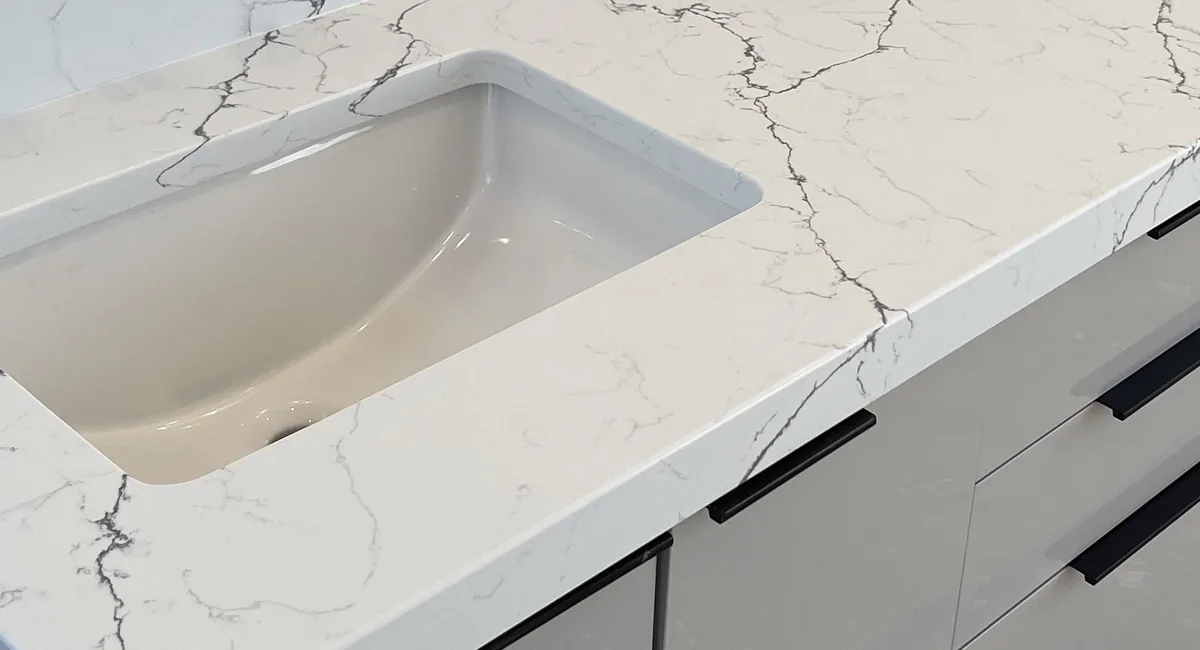
A crack needs one more question first: why did it happen? Thin spans in front of a sink or over a dishwasher break under stress, and a filled crack will open again if the stone is still moving. Check for the usual places a countertop cracks and whether the support underneath is doing its job. Some lines were never breaks at all: see cracks and fissures.
White marble can also turn yellow in spots. Some of these stones hold iron, and water that sits for a long time, or some cleaners, can bring it out as a rusty tone. A poultice sometimes lightens it. Since the color comes from inside the stone, nobody should promise it will go away.
What to do now, and what makes it worse
A few things help right away:
- Blot spills, and clean with a pH neutral stone cleaner.
- Try a marble polishing compound on a light etch, but test a hidden spot first and follow the directions.
- Put painter's tape over a sharp chip so it stops catching, and keep any broken piece.
And a few things make the repair harder or more expensive:
- Vinegar, lemon or bathroom sprays. They will etch it again.
- Sandpaper or scouring powder on a polished top. You trade one small mark for a wide scuffed patch.
- Bleach on a yellow spot.
- Sealer over a stain. It can lock the stain in.
- Hardware store fill on white stone. A bad color match has to come out before the real repair.
What moves the cost
We do not publish a number for marble repair, and nobody should quote one from a description. Repair pricing comes from our team looking at your photos, and we reply with an estimate within 24 hours. Small jobs have a minimum charge, and you see the estimate before you approve anything. Text your photos to 206-653-4479 and we will start there.
What moves it:
- How much has to be blended. This matters more than the size of the mark, and a polished top usually means more of it.
- How many problems you have. Several repairs on one visit often beat two trips.
- Where it is. Work around a sink, faucet or backsplash is slower than work on an open run.
- The cause. If a cabinet or support has to be fixed first, that is part of the scope.
More on how we assess it is on our countertop repair page. See also Lynnwood, Seattle and Kent.
Repair, refinish or replace: three questions
Does it bother you from where you normally stand? Marble picks up a soft patina with use, and many people come to like it. If you only see a mark with a flashlight, you may not need to spend anything.
Is the damage on the surface, or is the stone moving? Dullness, etching and fine scratches are finish problems, and marble answers them very well. Cracks that keep growing and tops that rock are a different conversation. Our repair or replace comparison walks through those.
Will you keep cooking the same way? If you squeeze lemons on this counter every day and each new mark bothers you, a repair buys time and not peace. Honing may be the answer, or a harder stone. Our pages on marble, quartzite and quartz compare how they live day to day, and the budget planner gives you a range for each. Replacing one piece is risky too, because marble varies from slab to slab.
Frequently asked questions
Can etching on marble be repaired, and will it come back?
Yes to both. Light etching usually improves a great deal with polishing, and deeper etching can be honed down and polished back up over a wider area. New acid will etch the repaired surface again, because that is how the stone reacts. Quick wipes and pH neutral cleaners slow it down. A honed finish makes new marks much harder to see.
Can a chip in white marble be repaired so it does not show?
It can usually be made much less visible, and sometimes it is hard to find. We will not promise it disappears. White marble lets a little light into the stone and repair resin does not, so a fill can look slightly flat in low light. If you still have the broken piece, keep it, because gluing it back is often the closest match.
Does sealing marble stop etching?
No. Sealer slows liquids from soaking in, so it helps against stains. Etching is acid reacting with the stone at the surface, and sealer does not prevent that. Even a freshly sealed top can etch. You still want to keep marble sealed, and you should expect to manage etching with habits, polishing or a honed finish.
Should I switch my polished marble to a honed finish?
It is worth considering if the etching keeps bothering you, since marks show far less on a matte surface and spot repairs blend more easily. It has to be done across the whole top. The stone will look softer, with quieter veins, and a honed surface can take stains a little more readily, so keep it sealed. Look at a honed sample before you decide.
How do I know if my countertop is marble or cultured marble?
Cultured marble is usually a bathroom vanity top with the bowl molded in as one piece and no joint around the sink. It has a coating and is cast, not cut from a block. Real marble usually has a separate sink, and its veins run through the stone, so they continue along a cut edge. If you are not sure, send a photo of the edge and the sink.
Can a cracked marble countertop be fixed?
Often, yes. The crack can be stabilized, filled and polished, and that usually leaves the top sound and much quieter to look at, with the line often still visible. The first step is finding out why it cracked. If the stone is still moving because of weak support or a cabinet that has shifted, a filled crack can open again.
Send two photos and we will tell you what you have
One close up of the damage, and one from a few feet back with the rest of the counter in it. That is usually enough to tell an etch from a stain or a real break. If you can handle it yourself, we will say so. Top Granite is a family business in Lynnwood. Call or text 206-653-4479, use the contact page, or start with the budget planner.
What could your
countertops cost?
Answer a few questions about your space and material and get an estimated range in about two minutes. Your formal quote follows a laser template and a review of the scope.
Your ideas in. A clearer next step out.
Rather talk it through? 206-653-4479 ↗︎What would you like to change?
Which material are you leaning toward?
Build my countertop estimateChoose your details and see your estimated range.
Related reading.
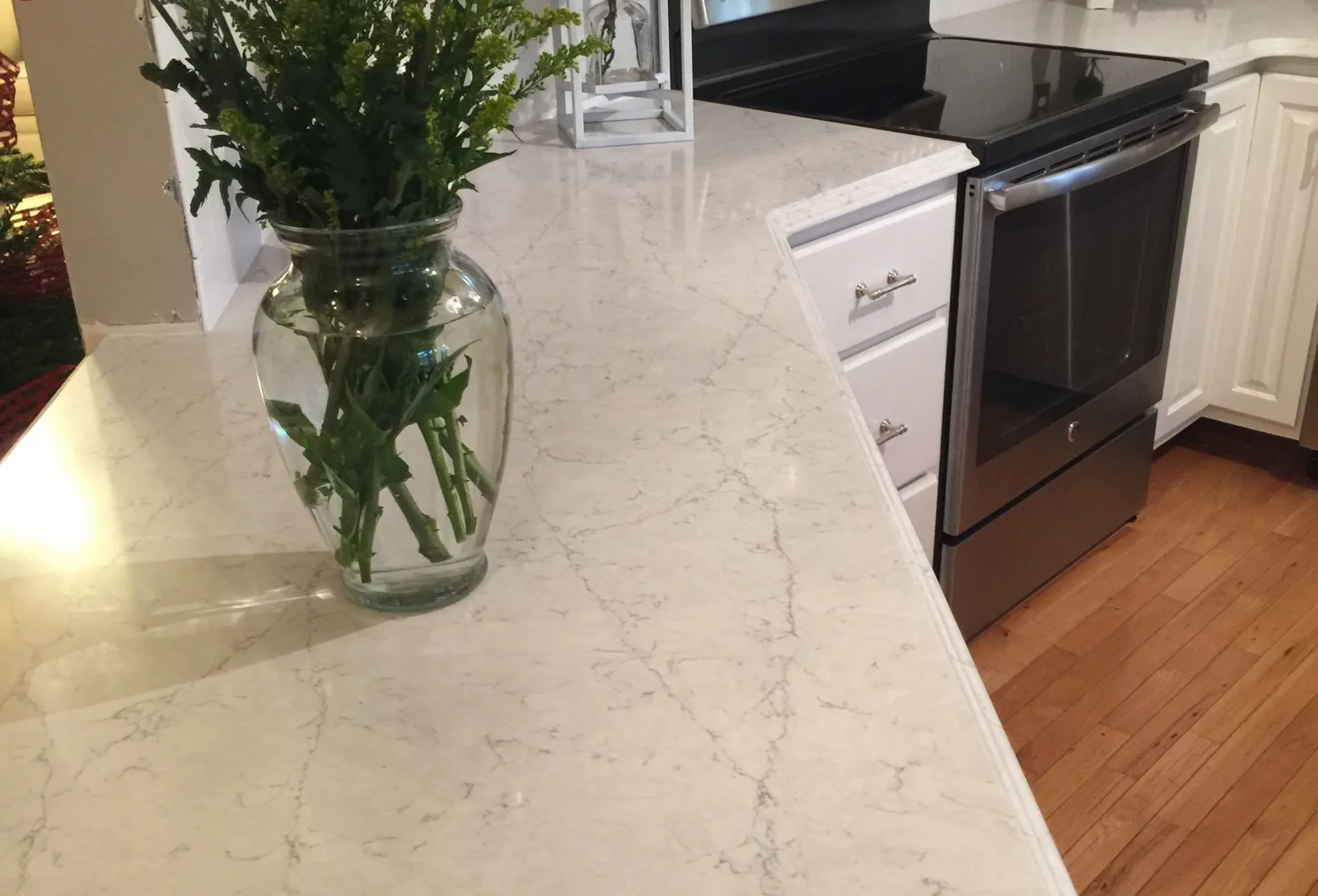
Countertop stains and etch marks: what comes out and what does not
A stain soaked in and can often be drawn back out at home. An etch mark ate the polish and has to be worked back by hand. How to tell them apart, the water test for your sealer, and what needs a repair visit.
Read article ↗︎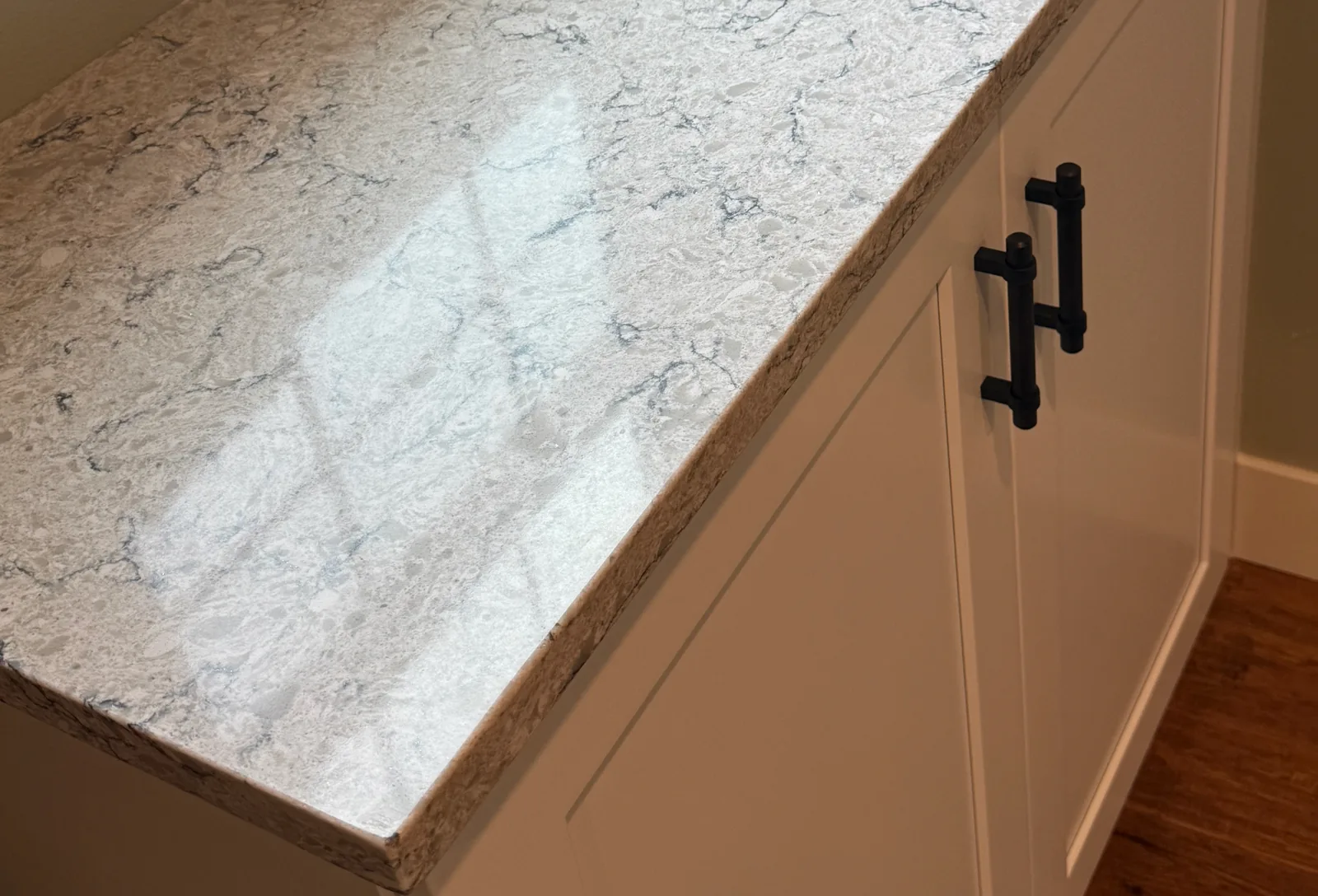
Countertop refinishing: what 7 surfaces can actually get
Refinishing means restoring the finish on stone, or painting a coating over laminate and tile. What 7 surfaces can actually get, three checks to see if yours is really worn, and how to decide between refinishing and replacing.
Read article ↗︎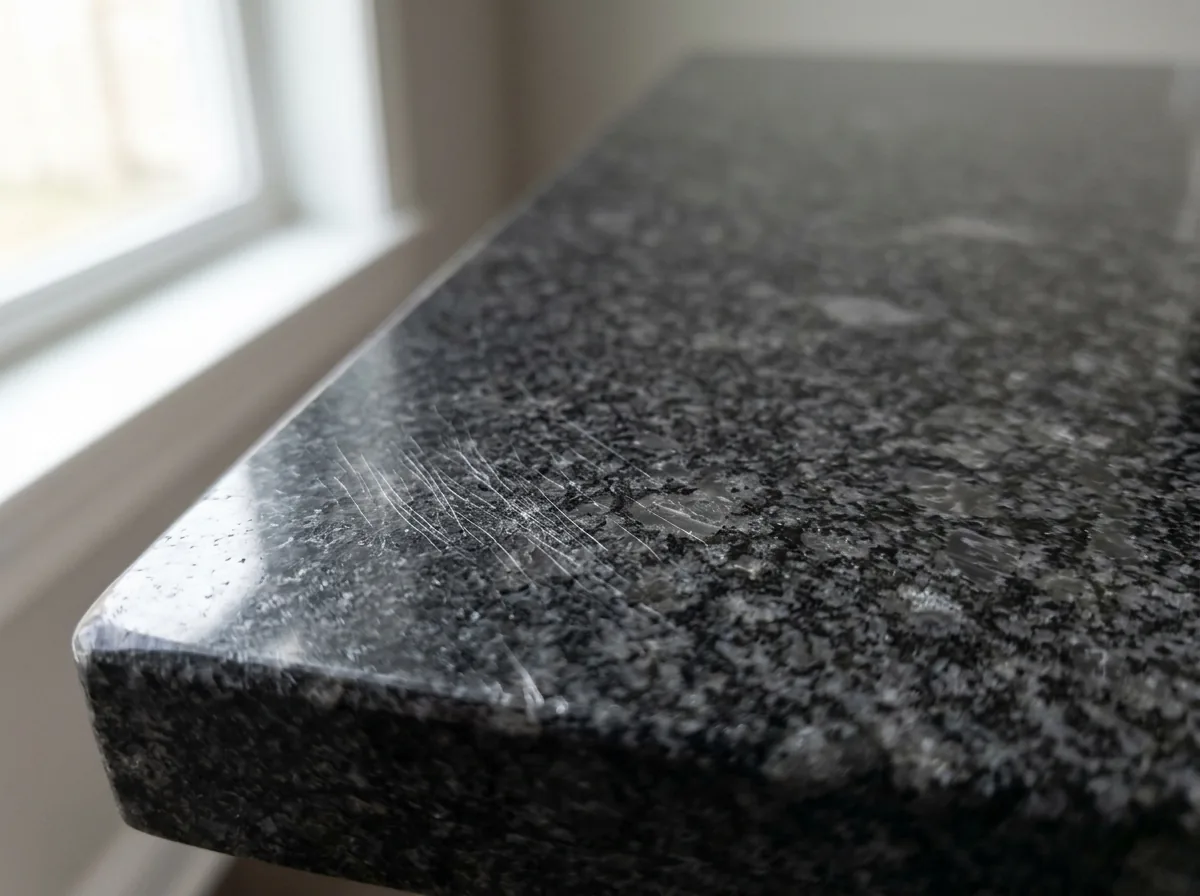
Scratched countertop: what sands out and what does not
Half of what people call a scratch is metal left on the stone and wipes off in minutes. For the rest, granite, quartz, marble and soapstone each answer the same sandpaper differently.
Read article ↗︎Bring your ideas.
We’ll help with the next step.
Choose the next step that feels right for you.