

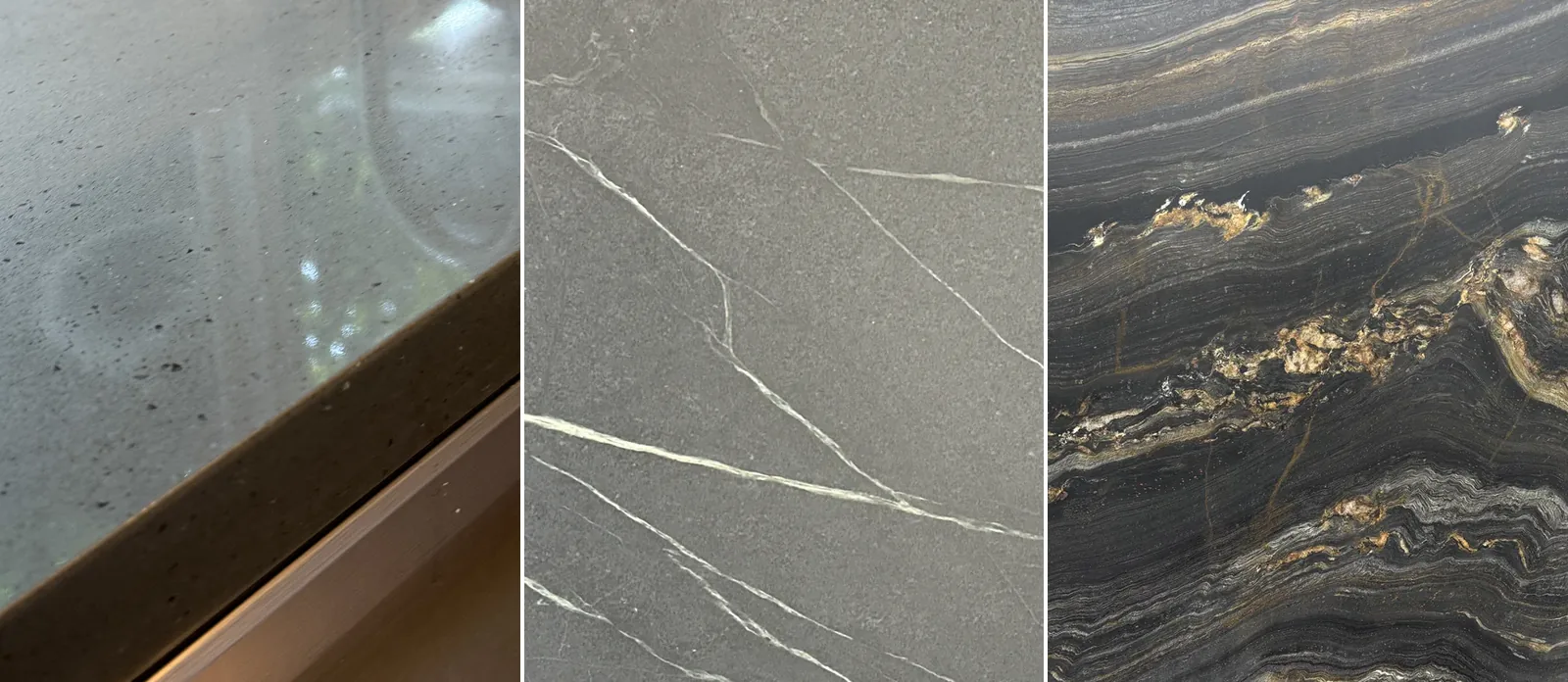
Polished stone reflects light, shows color and veining at full strength, and resists stains best. Honed stone is matte and calm, hides etching, but needs sealing more often. Leathered stone has a soft texture you can feel, hides fingerprints and water spots, and suits busy kitchens. The right finish depends on your stone, your light and how you cook.
What polished, honed and leathered actually mean
All three start as the same slab. The finish is the last step at the surface: how far the stone is ground and buffed before it leaves the yard. It changes how the countertop looks and feels, not what the stone is made of.
Polished
The surface is ground smooth and buffed until it reflects light like glass. Color looks deeper, veins look sharper, and the pores are tight, which is why polished stone shrugs off most spills. It is the most common finish on quartz, granite and quartzite.
Honed
The stone is ground smooth but stops before the shine. The result is flat and matte, with a softer, lighter color and quieter veining. Soapstone comes honed, and honed is a popular choice for marble because etch marks are far less obvious on a matte surface.
Leathered
The surface is brushed so the softer minerals wear down a little and the harder ones stand out. You get a low sheen and a texture you can feel with your fingertips. It works best on darker granites and quartzites, where it brings out depth without the mirror effect.
Six differences that matter in a real kitchen
Showroom samples are clean and dry. Your kitchen is not. These are the points homeowners notice after the first few months of living with each finish.
| What you will notice | Polished | Honed | Leathered |
|---|---|---|---|
| Look | Glossy, deepest color, sharpest veining | Matte, softer color, quieter pattern | Low sheen, rich color, visible texture |
| Feel under your hand | Smooth and slick | Smooth and flat | Slightly rippled, like soft leather |
| Fingerprints and water spots | Show on dark stone in raking light | Oily fingerprints can show on dark stone | Hides them best of the three |
| Etching and fine scratches | Show as dull spots in the shine | Blend into the matte surface | Hidden by the texture |
| Stains and sealing | Most resistant, the tight surface slows absorption | Absorbs a little more readily, keep it sealed | In between, depends on the stone |
| Daily cleaning | Wipe and dry | Wipe and dry, deal with oil and wine sooner | Wipe, with a soft brush now and then for crumbs in the texture |
One thing does not change with the finish: heat. A hot pan treats a honed top the same way it treats a polished one, so use a trivet on every finish.
Want to see what your kitchen could cost before you pick a finish? The budget planner gives you an estimated range in about two minutes, using your material and the size of your space. Or call 206-653-4479 and talk it through.
Which stones come in which finish
Quartz. The finish is made at the factory, so you choose it with the color. Most quartz colors are polished. Some are also sold in a matte or textured version, and those can show marks from metal pans and fingertip oil more than the polished one, though most of it wipes off.
Granite. Polished is the usual choice, and leathered is common on darker granites. Our granite countertops page lets you filter real slabs by finish.
Quartzite. Polished and leathered are both easy to find, and honed shows up on some colors. The quartzite countertops page has the same finish filter.
Marble. Here the finish matters most, because marble etches when lemon, vinegar or wine sits on it. A honed top makes those marks much harder to see. The marble countertops page explains the tradeoff.
Soapstone. It comes honed, with the soft matte surface the stone is known for. See soapstone countertops for how it ages.
What moves the price, and where finish fits
The finish is part of the slab you pick, so its cost and availability follow that slab. A color you love may only be on hand in one finish this month, and the same stone in another finish can be a different lot. What moves the total more than the finish label:
- Area and slab count. How much stone your layout needs, and whether it fits in one slab or two.
- Thickness. 3cm stone costs more than 2cm in the same color.
- Edge profile. An eased edge is included. Ogee, bullnose and mitered edges add fabrication time.
- Cutouts. Every sink, cooktop and faucet hole is a cut.
- Tear-out. Removing old tile or old stone is more work than removing laminate.
- Access. Stairs, a long carry or a tight hallway mean more hands on install day.
The planner prices by material and size, then the free in-home visit confirms the slab, the finish and the final measurements.
How to choose in practice: three questions
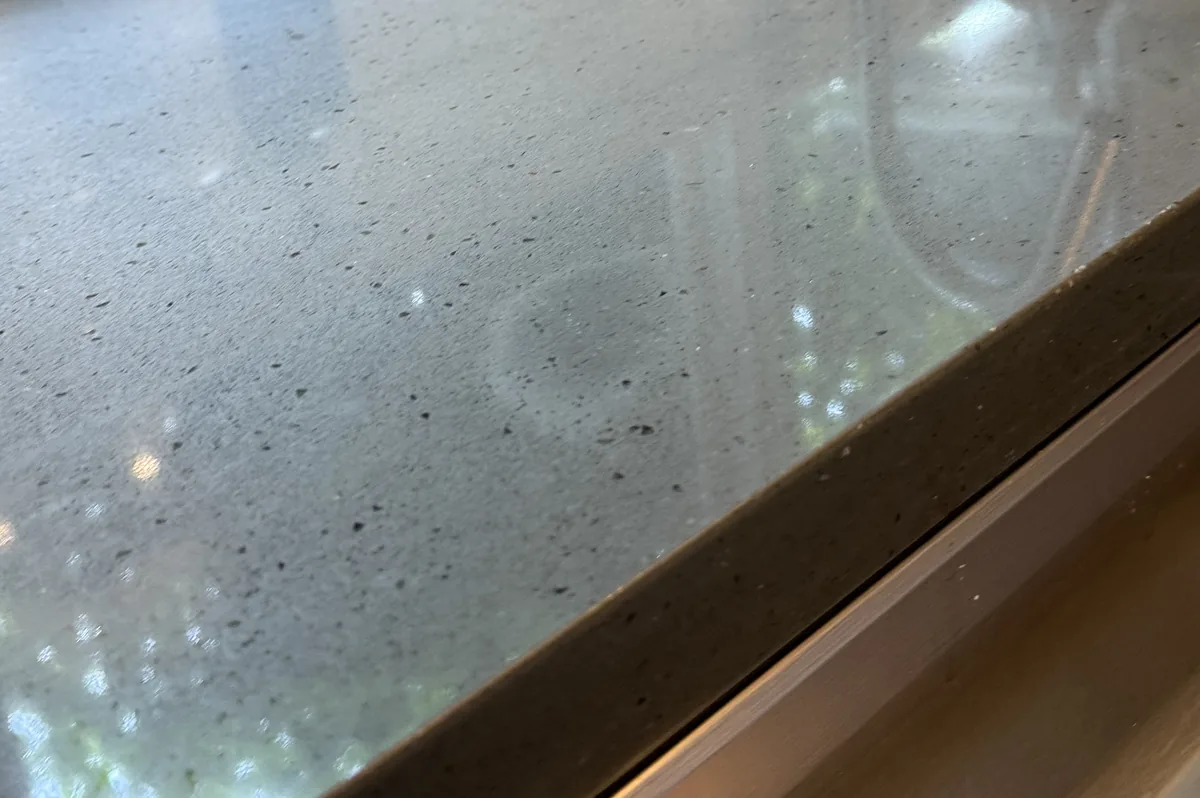
Is your stone dark or light? On a light stone, polished and honed both look clean, and the choice is mostly about style. On a dark stone, polished shows every water spot in morning light, and honed can show oily fingerprints. Leathered is the forgiving middle on dark granite and quartzite.
How hard is your kitchen on the counters? If you cook every night, have kids, or squeeze lemons on the counter, think about what you will see after a year. Polished is easiest to keep stain free. Leathered hides the most. Honed hides etching on marble but asks for more attention to oil and red wine.
Have you seen it in your own light? A finish that looks perfect under showroom lights can read very differently next to a north-facing window on a gray afternoon. Ask for a sample in the finish you want and look at it in your kitchen in the morning and at night before you decide.
Still torn between two? Send a photo of your kitchen and the stone you are considering to 206-653-4479, and we will tell you which finish suits it, free.
Frequently asked questions
Is honed or polished better for a kitchen countertop?
Neither is better for every kitchen. Polished resists stains best and shows the stone at full color. Honed looks calmer and hides etching, which is why it is popular on marble, but it absorbs oil and wine a little more readily and needs sealing more often. Choose by your stone and how you cook.
Do leathered countertops need to be sealed?
Yes, the same as the polished version of that stone. Leathering changes the surface texture, not the stone underneath. A simple check is to leave a few drops of water on the counter for several minutes. If the stone darkens under them, it is time to seal.
Does a honed finish stain more easily than polished?
A little. Polishing tightens the surface, so liquids take longer to soak in. A honed surface is more open, so oil, wine and coffee can get in sooner. Keep a honed top sealed and wipe spills promptly, and it holds up well.
Can I change the finish after the countertop is installed?
On natural stone it is often possible to hone a polished top or polish a honed one, but it is surface restoration work done across the whole countertop, not a spot fix. On quartz the finish is made at the factory and is not something you change later. Our article on countertop refinishing covers what each surface can get.
Do honed and leathered countertops cost more than polished?
It depends on the slab, not the finish name. Each finish is a specific slab with its own price and availability, and the same color can be priced differently from one lot to the next. The budget planner gives you a range by material and size, and the in-home visit confirms the exact slab.
Not sure which finish? Send a photo
Take a photo of your kitchen in daylight and, if you have one, of the slab or sample you like. We will tell you how each finish will look and live in that room, free. Top Granite is a family business in Lynnwood serving greater Seattle and the Eastside, rated 5.0 on Google, licensed in Washington, with a 2-year labor warranty on our work and a free in-home visit to measure and quote. Call or text 206-653-4479, use the contact page, or put a range on your project with the budget planner. If stains or etch marks are what worry you most, our guide to countertop stains and etch marks goes deeper.
What could your
countertops cost?
Answer a few questions about your space and material and get an estimated range in about two minutes. Your formal quote follows a laser template and a review of the scope.
Your ideas in. A clearer next step out.
Rather talk it through? 206-653-4479 ↗︎What would you like to change?
Which material are you leaning toward?
Build my countertop estimateChoose your details and see your estimated range.
Related reading.
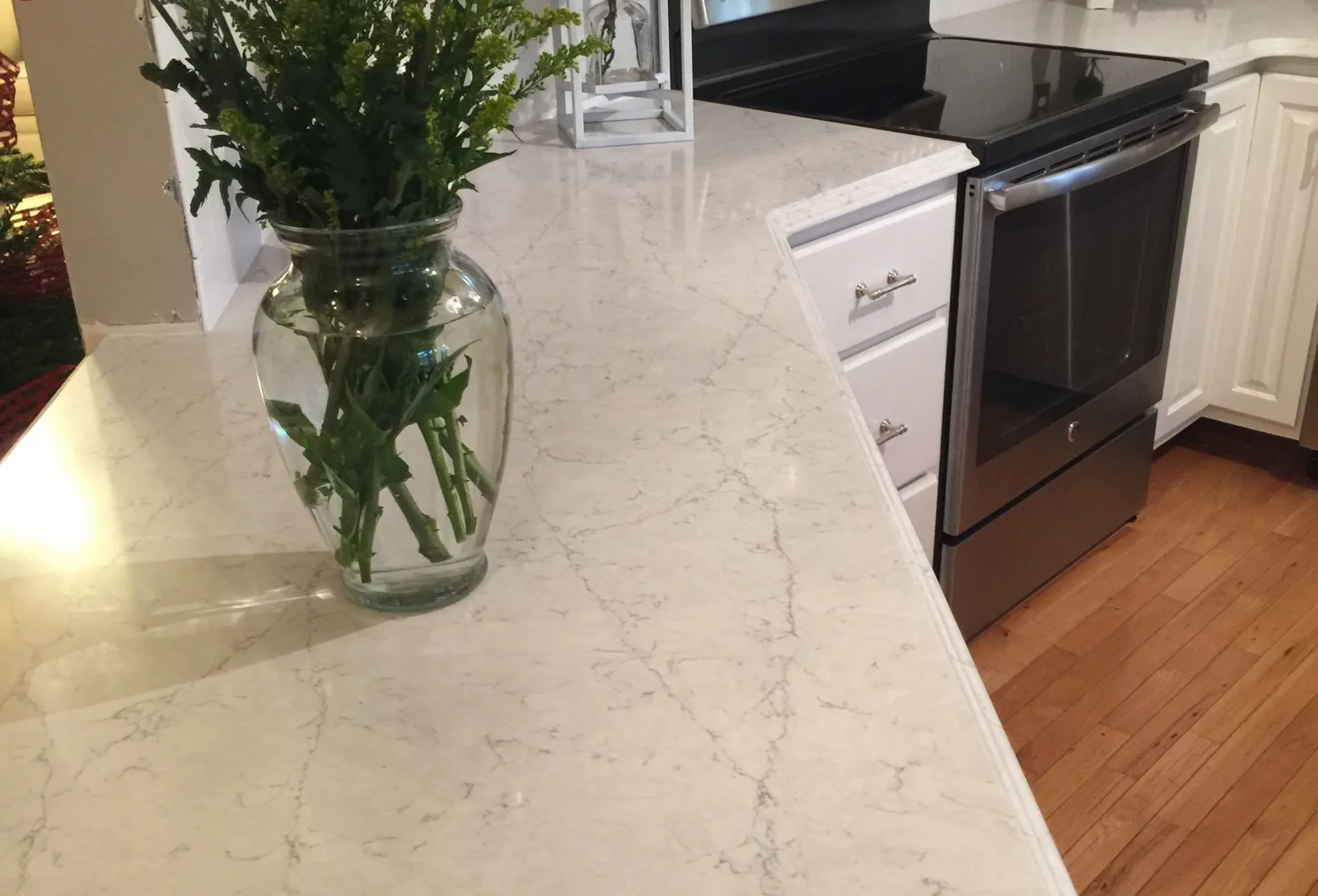
Countertop stains and etch marks: what comes out and what does not
A stain soaked in and can often be drawn back out at home. An etch mark ate the polish and has to be worked back by hand. How to tell them apart, the water test for your sealer, and what needs a repair visit.
Read article ↗︎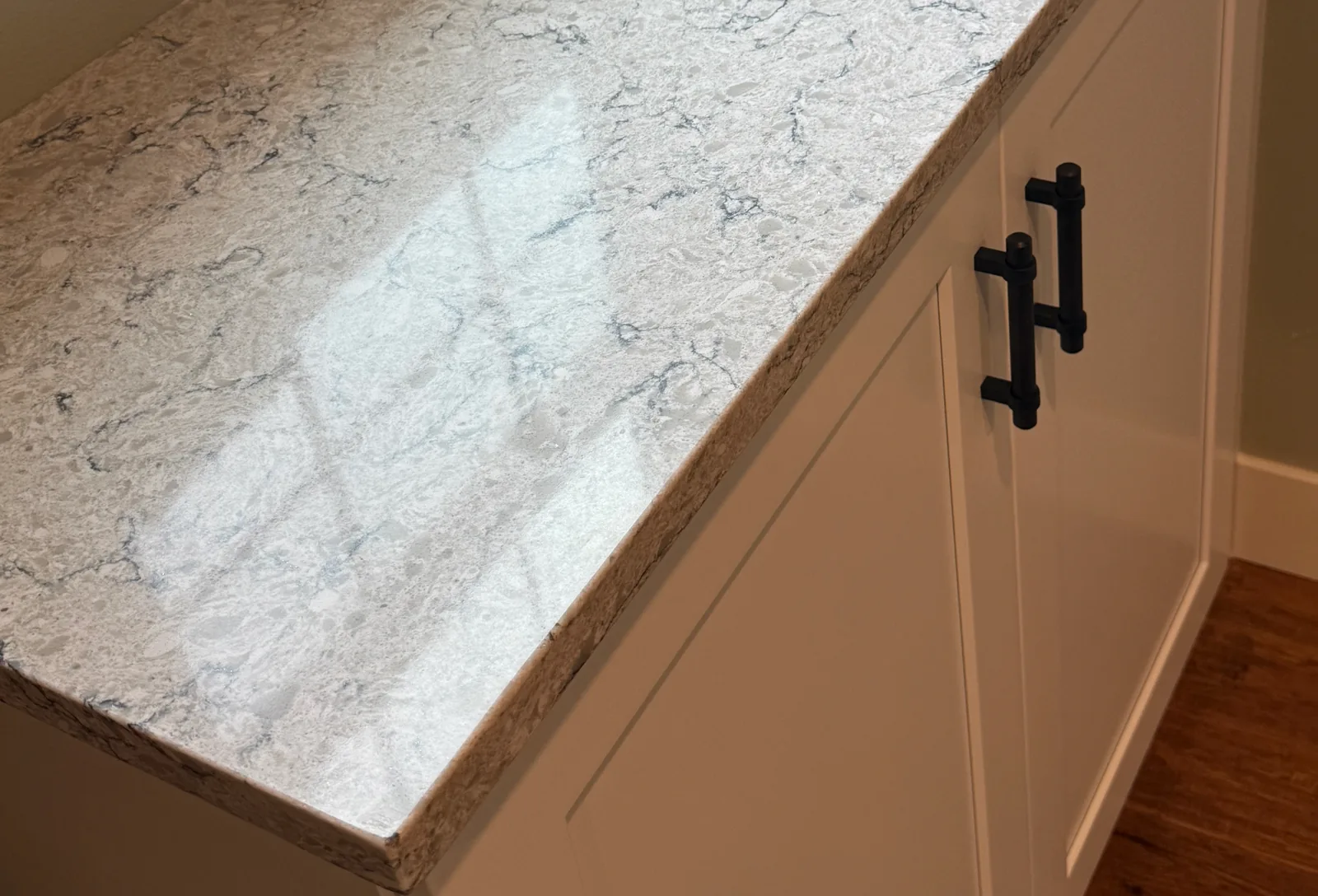
Countertop refinishing: what 7 surfaces can actually get
Refinishing means restoring the finish on stone, or painting a coating over laminate and tile. What 7 surfaces can actually get, three checks to see if yours is really worn, and how to decide between refinishing and replacing.
Read article ↗︎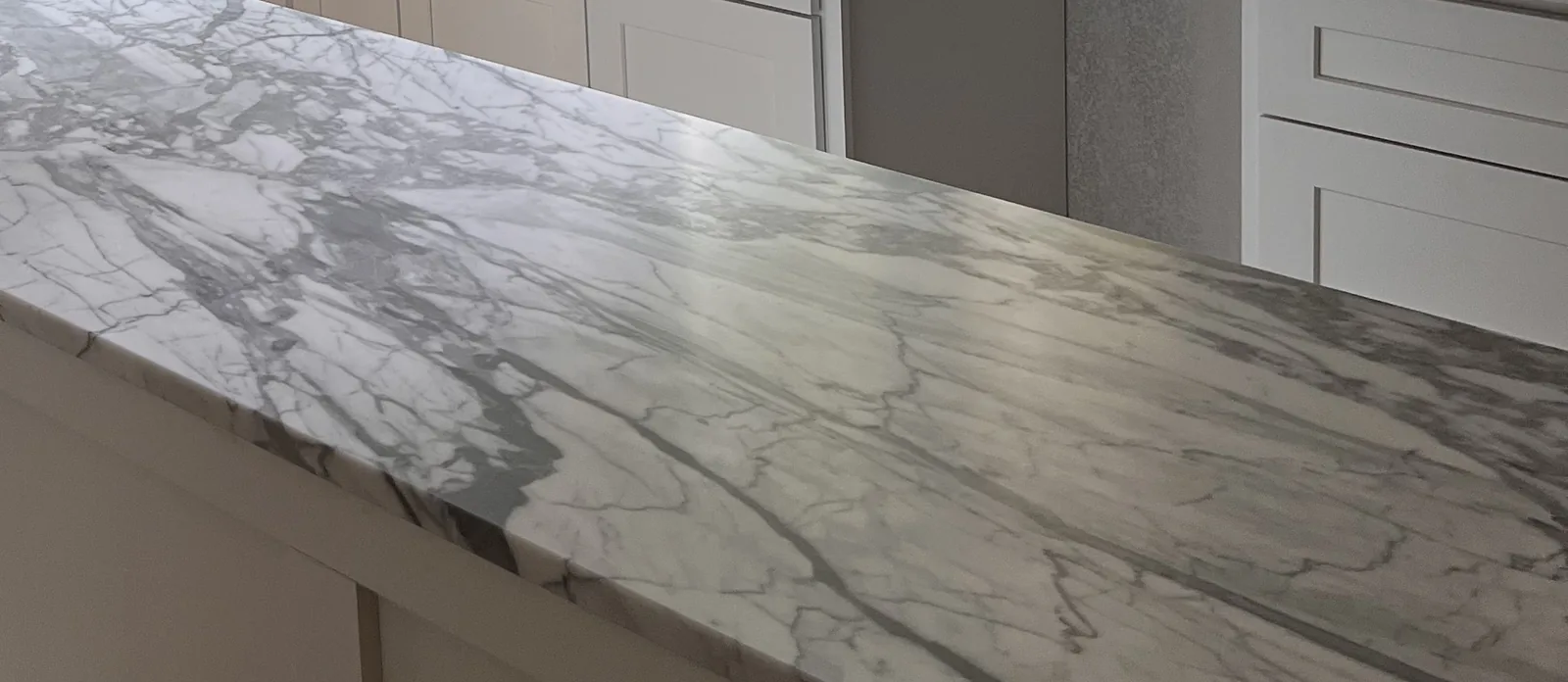
Marble countertop repair: what fixes 7 kinds of damage
Etching, chips, cracks and stains each get a different answer on marble. What every kind of damage can get, why polished and honed tops repair differently, and when a fix will still show.
Read article ↗︎Bring your ideas.
We’ll help with the next step.
Choose the next step that feels right for you.